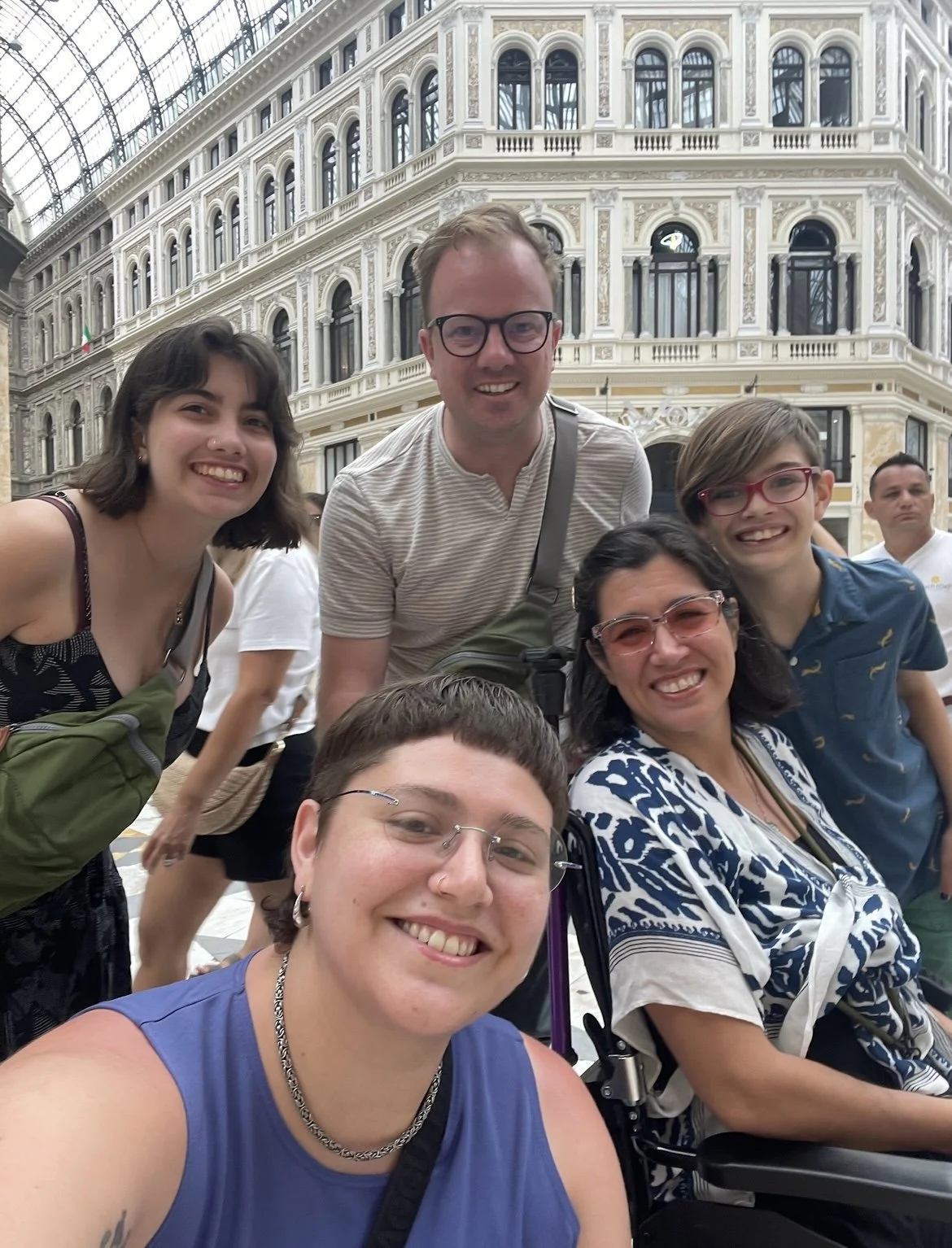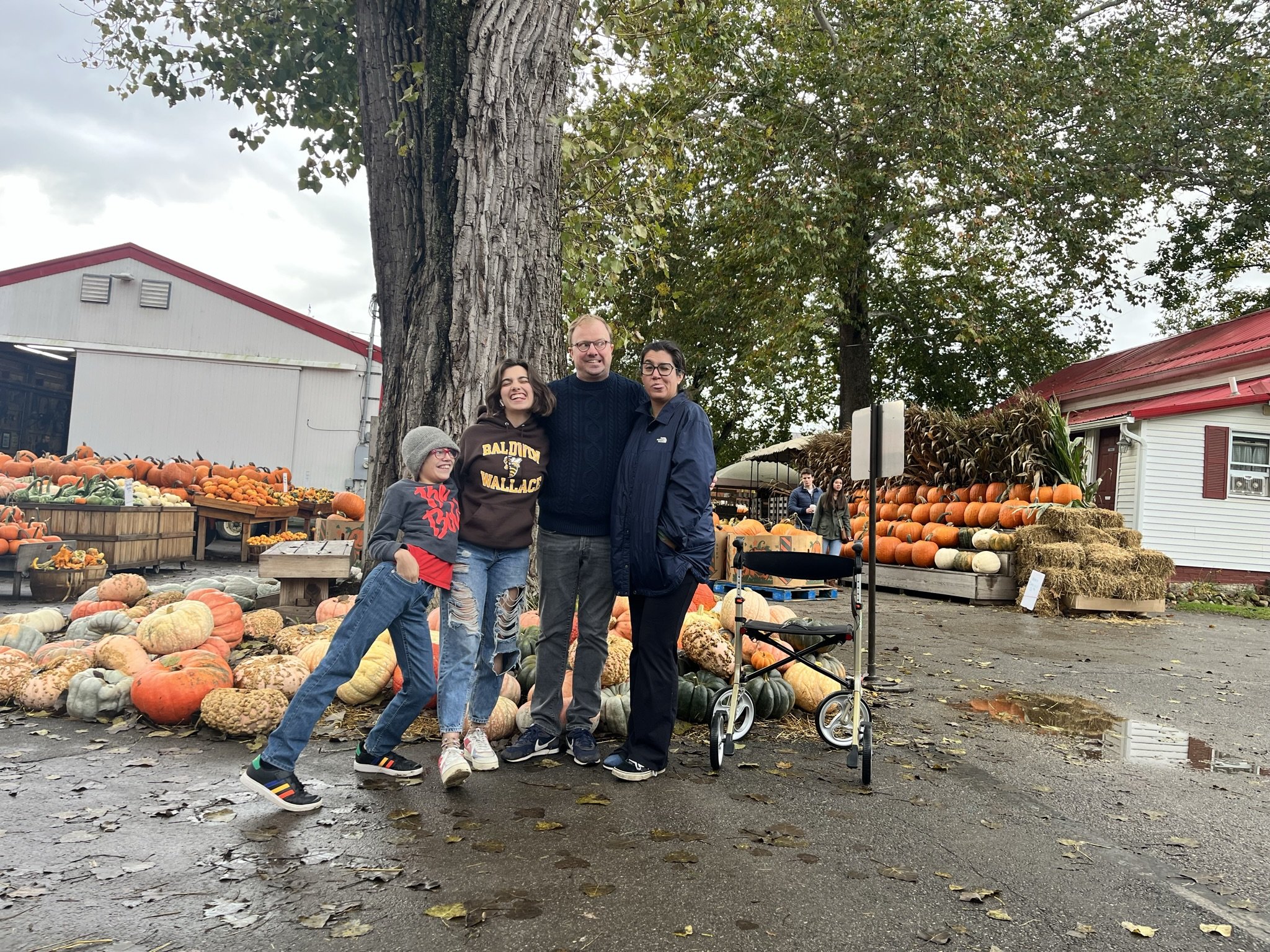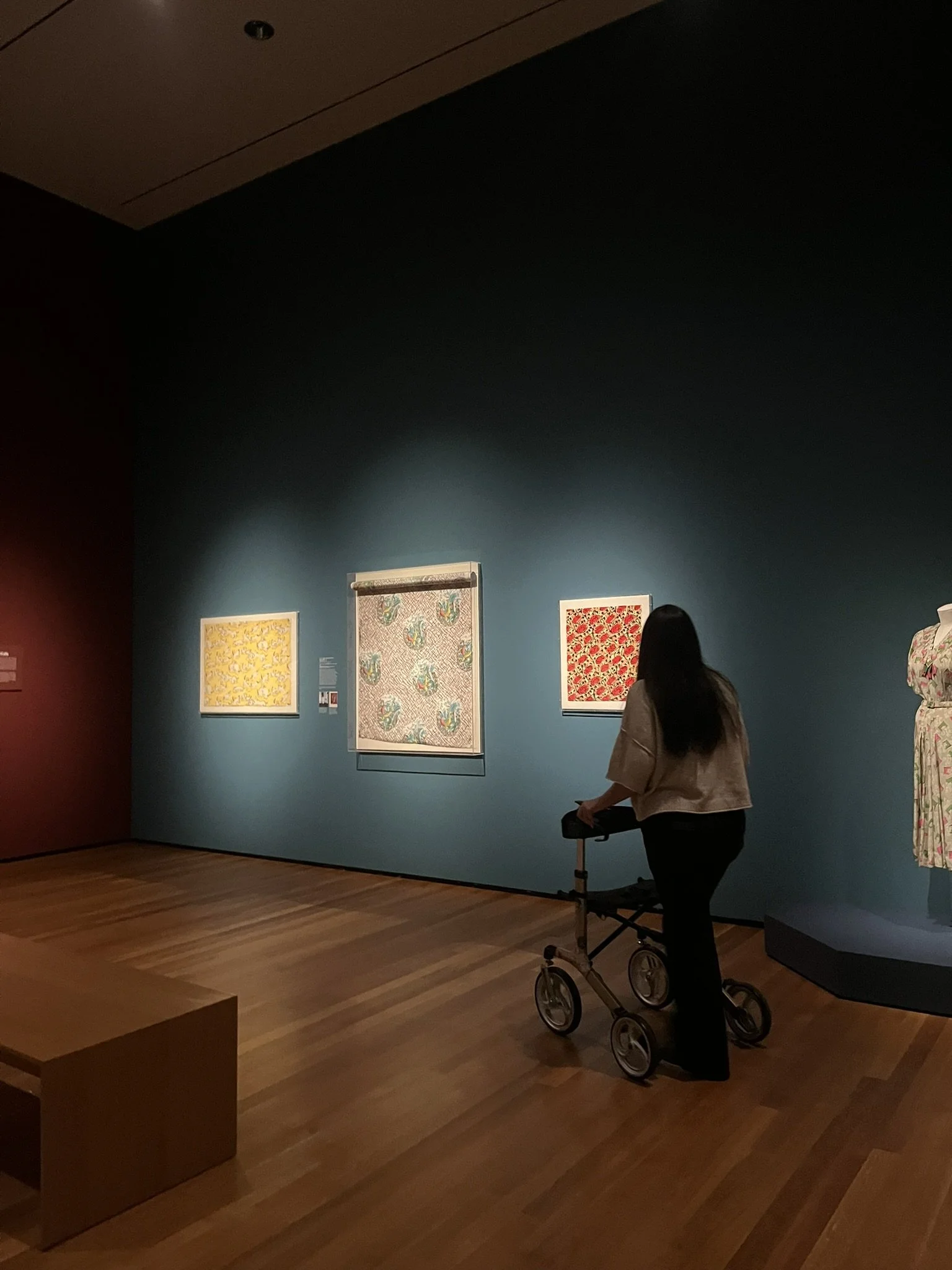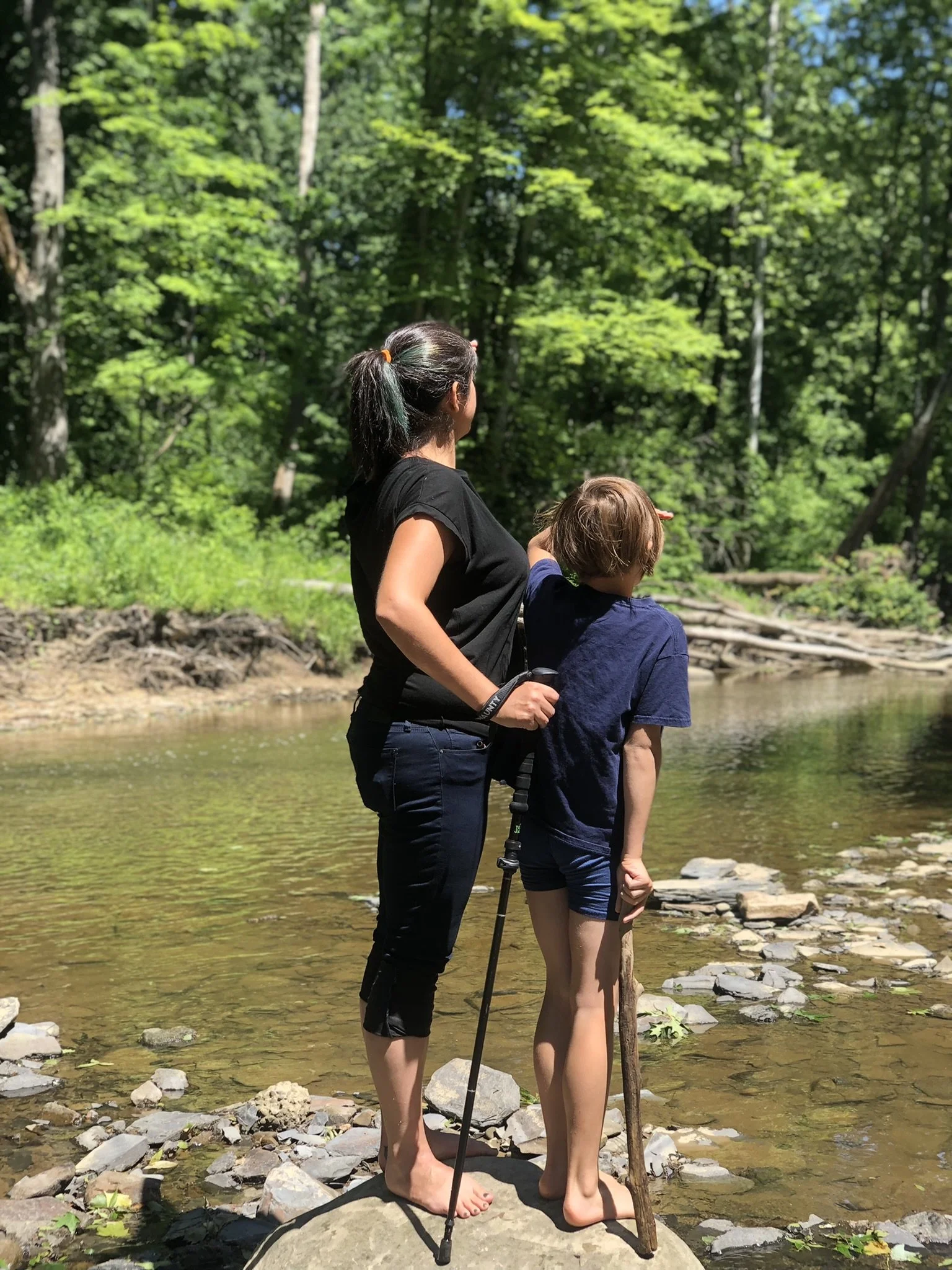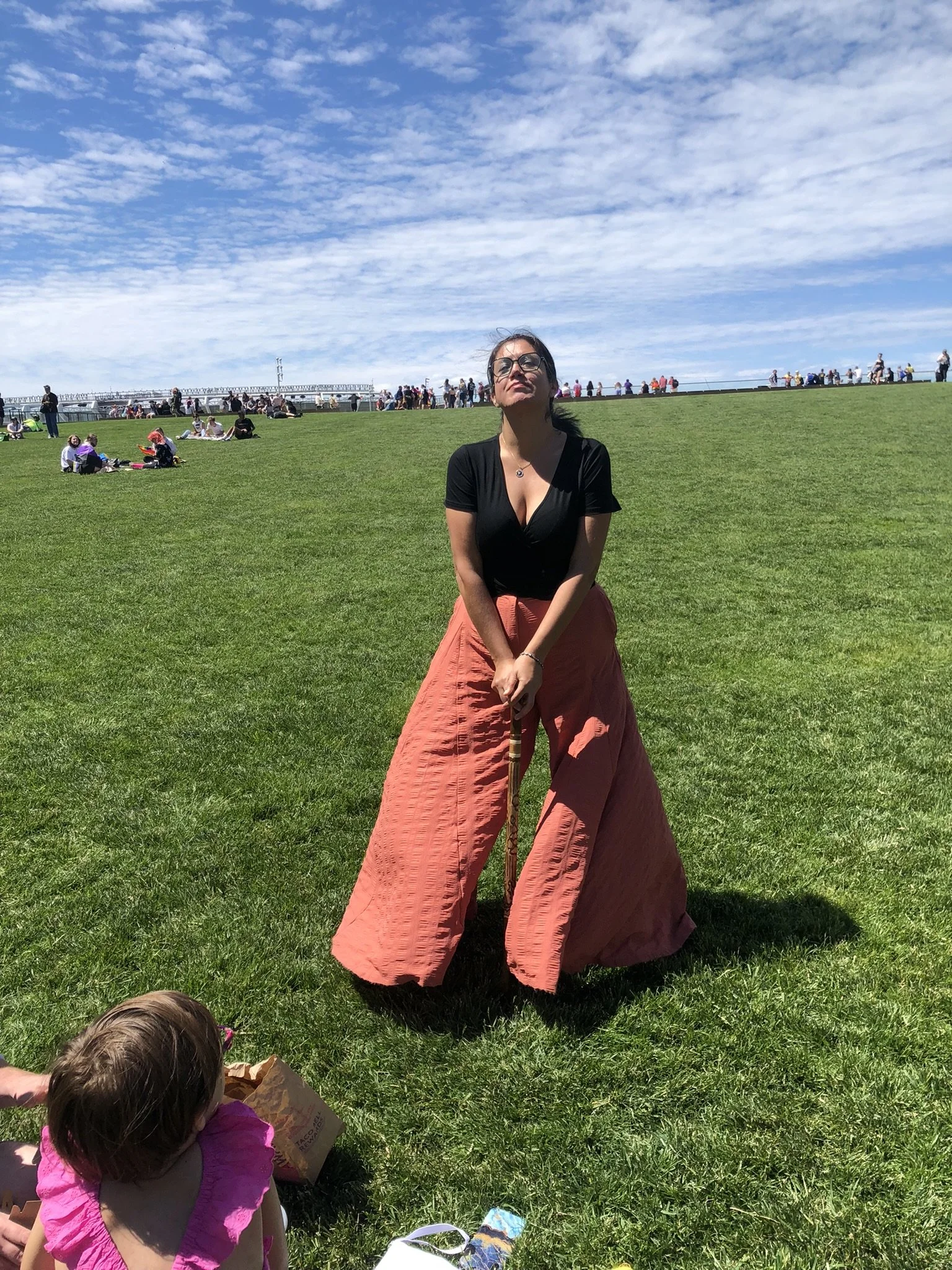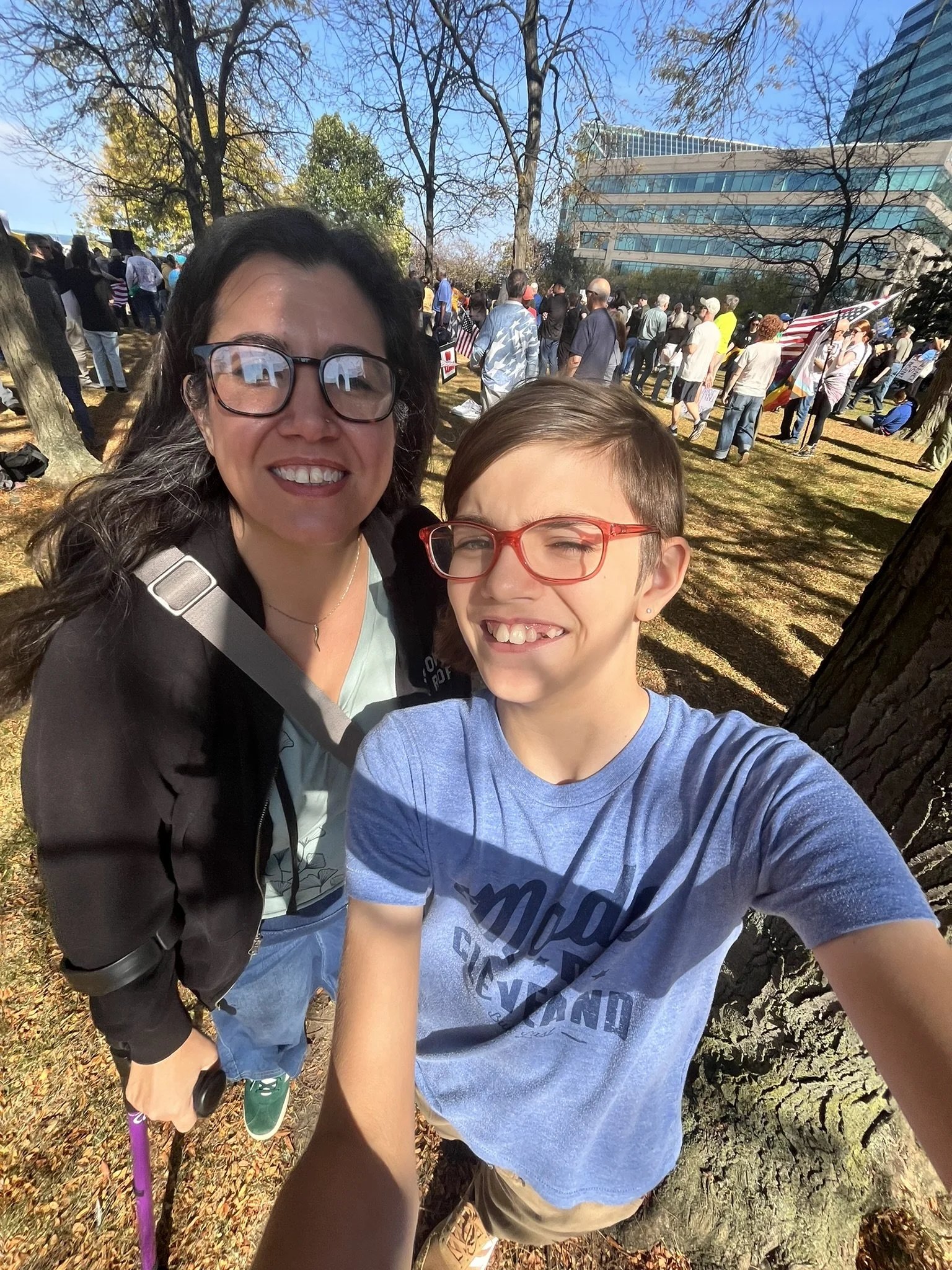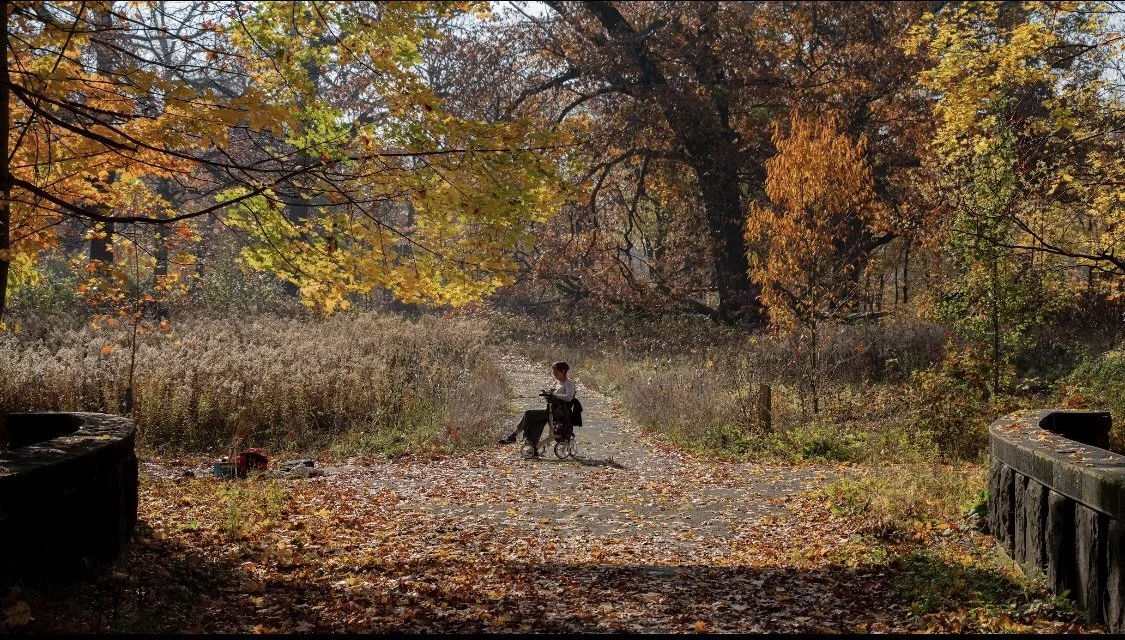
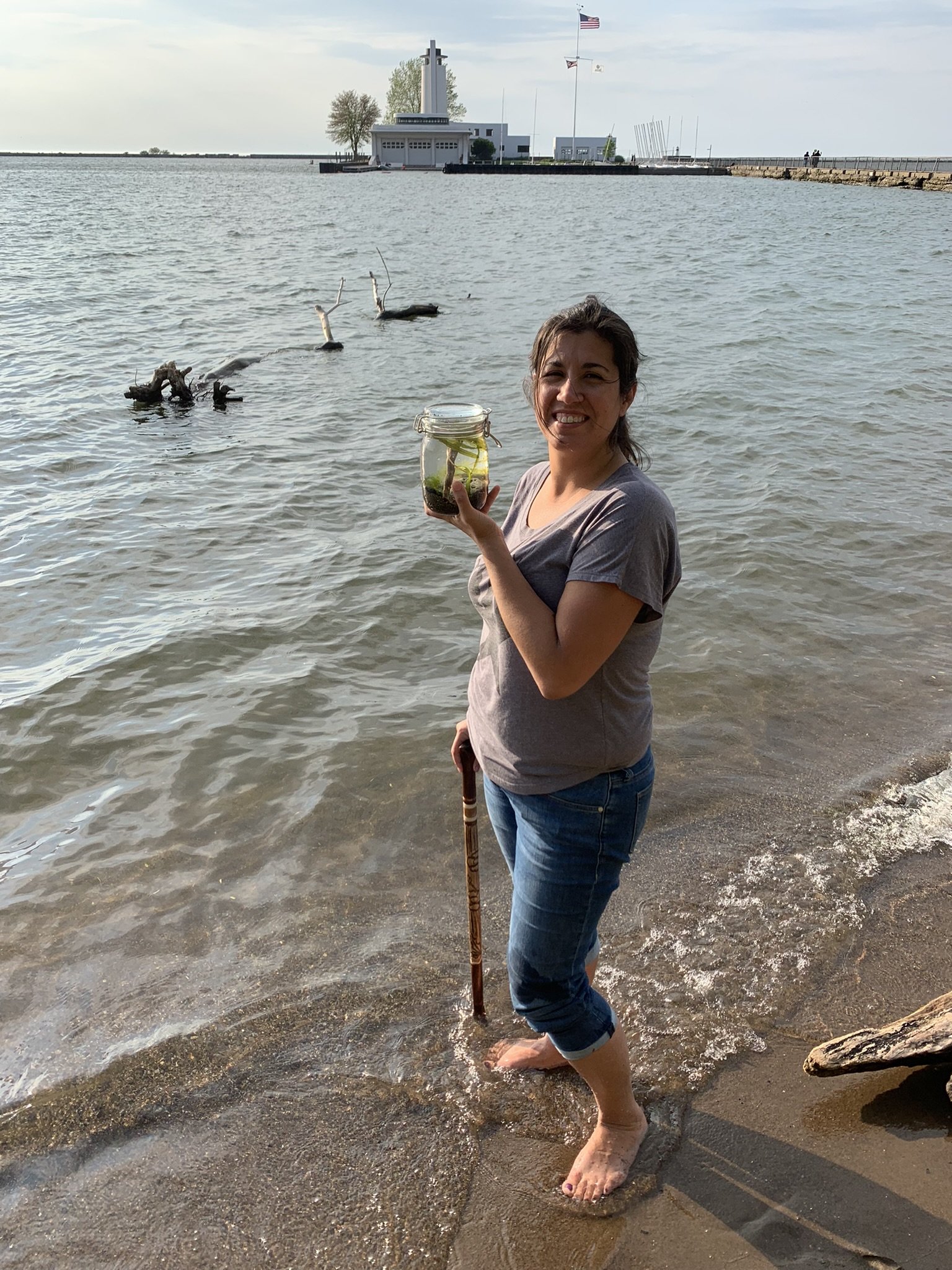
Photo Credit: Sam Butler
My Journey to Mobility Aids
I was resentful when my invisible disability became visible.
I first developed chronic illness when I was young, with symptoms starting around age 13. I was diagnosed with Fibromyalgia while in high school, and Ehlers Danlos in college. A competing predicament where muscle and ligament fight against each other for top priority of care.
Even then it was hard for me to talk about my pain with other people. It becomes all they want to talk about, all they know to ask about. I know it comes from a good and caring place, but I got tired of explaining, tired of listening to endless medicine, supplement, and therapy recommendations. It starts to feel like that is all I am. And so, I learned to hide it, to make it invisible when I can, tensing up to bear through pain while keeping a smile on my face so no one notices.
For nearly two decades I was able to manage my body in a way that my pain remained fairly invisible, even to people who knew me well. I would push through family dinners and work events just to go home and collapse in pain, and then find a way to get back up and do it again. It turns out that can only last so long. In the years leading up to 2020 I was working a much more physically and mentally demanding job than I was used to. I loved it – but it was also killing me. I could feel my body starting to break. The stress toll on my body came out in all kinds of ways and by 2019 it was hard to hide and hard to manage.
And then the world shut down, and my busy job and constant movement just stopped. I was forced to really listen to the pain for the first time in my life. My body screamed at me with layers and layers of ignored strains building up over time. The constant tension that held my ligaments in place is also what was damaging to my muscles, so I began to consciously relax, to reduce the tension and stress that I had used all of my life to keep me going, and allow my muscles to begin healing.
It is hard to reduce tension that is protecting you. Without it, the threat of a small bump from another person, or a bit of uneven ground can quickly become an injury to recover from. I realized then how much I had used this tension and stress in my mind and body to try and keep me safe. I started looking for answers and seeing what other people were doing to manage this and one answer kept coming up – mobility aids.
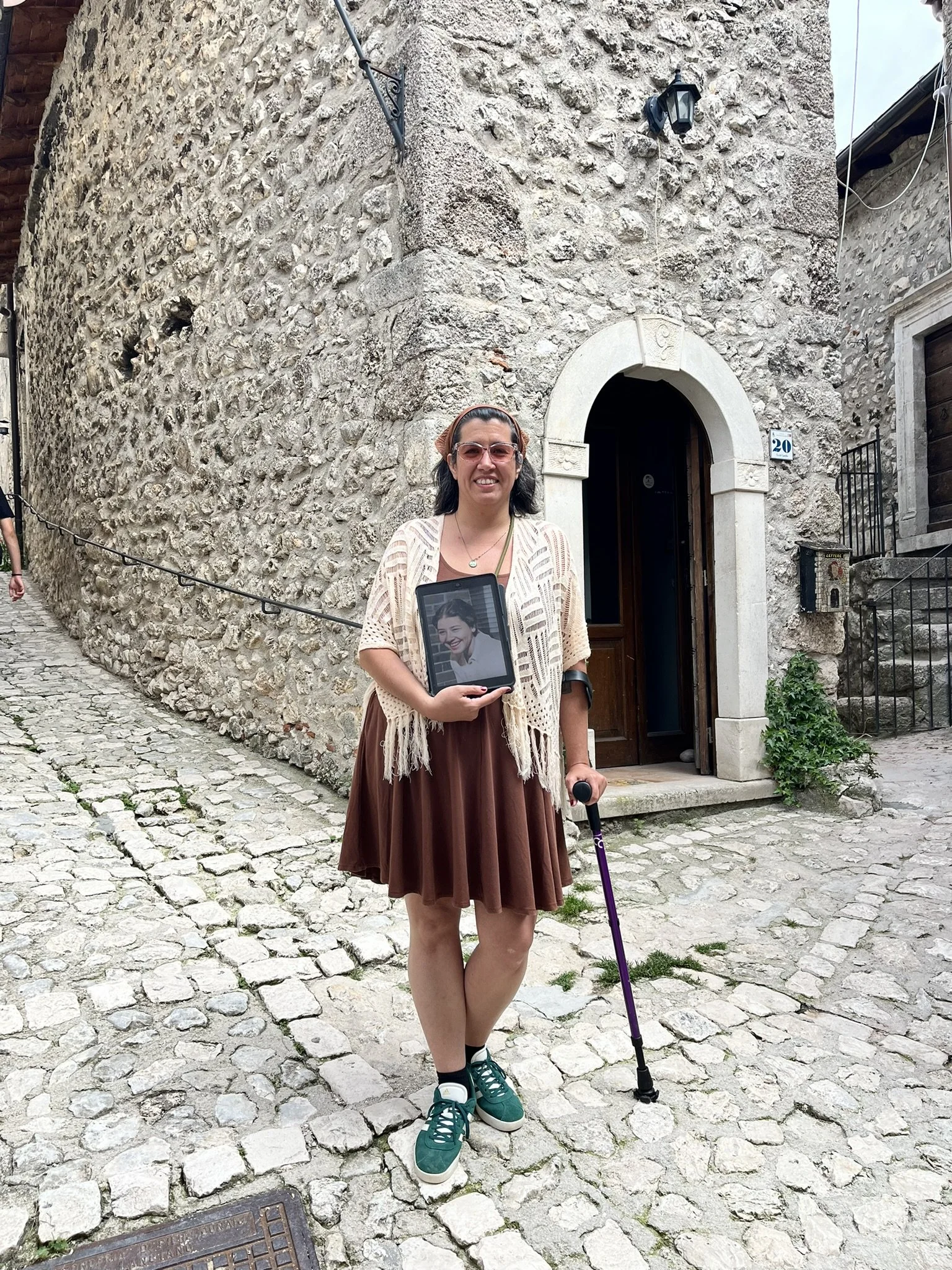
I was so resistant at first. Mobility aids felt like something you used if you couldn’t possibly get around without it. And how helpful could a cane even be? As it turns out - a lot of help.
The first time I went out with a cane was to a Kishi Bashi concert at the Grog Shop with a friend. I really wanted to go, but I knew there wouldn’t be seating. I was doing pretty well at that point, but wasn’t sure I could stand that long, without at least finding a wall or something to lean on. I was so self-conscious walking in, explaining to my friend (who of course was kind and gracious about it). I found a place near a post to tuck myself into, and started listening to the concert. I noticed my body relax. At one point someone walked past me and I felt myself tense up as I jostled a bit, but immediately I was able to restabilize myself with the cane and relaxed again. It was honestly revolutionary. I felt like I had permission to actually let down my muscles for the first time. That night and the next day I noticed I was in considerably less pain than I had expected to be in. I started using a cane more regularly and began to see the benefits of mobility aids.
The next time I tried a new mobility aid was in South Carolina for Highwater – an outdoor music and food festival by one of our favorite bands, Shovels and Rope. My partner and I had attended previously and wanted to bring our kids this time. I knew I couldn’t make it through walking that much with just a cane and no place to sit, so I began looking again for a new option. I found my rollator which was a god-send. Tension with walking nearly dissipates when I use it, and there is always a chair available. It completely saved me at that festival and even though I really struggled at points, I was able to see and experience so much more than I would’ve without it. We were so grateful, but even then we saw the need for more options when at the end of the last day I couldn’t walk any further and my partner ended up pushing me on the rollator to the car.
These experiences really changed the way I saw mobility aids. My life would be so much more limited if I only used them when I absolutely had to. I could also get around the world without a car – but that would severely limit what I can do and experience in life. We don’t view a car as useful only when we absolutely cannot walk somewhere. It lets us go further than we ever would on foot, and even in short distances where we could walk, it can make us more comfortable and able to experience the place we are headed without showing up drenched in rain, or soaking in sweat. Mobility aids simply expand your possibilities while reducing negative outcomes.
I still sometimes feel self-conscious when I am using mobility aids. Especially at times when my energy hasn’t tanked yet and it might not be visible to people while I am using them. It somehow can make you feel both invisible and like the most visible person in the room, and that has made me resentful at times. But I have also learned how harmful it is to feel negative about something that helps me. I can’t control what other people think about me, but I can adjust how I think about myself. Since then I have become a bit of an evangelist about mobility aids. It becomes a wonderful point of connection with people around me, especially elders who have similar struggles.
When we were on that trip to South Carolina, I had a woman and her daughter stop me because they were struggling with her model of rollator and they liked mine. We chatted for a while about life and I showed them all the features I had looked for to find the right option for me, the big wheels, the easy folding, the sturdier frame so I could use it on grass. Then I helped them look it up on their phone so she could buy the same one when they got home. I have had these interactions dozens of times now.
I chat with people about their canes, crutches, and wheelchairs. I meet elders who could clearly use a cane but don’t like the stigma so they refuse to use it. They admire the carved wood on mine and I tell them how much better I feel, how it will help them – just get a pretty one. Even after I had started using mobility aids, my own grandparents were still refusing to. I finally convinced them to use canes after a couple of falls, and then my grandma fell while in Florida and was having trouble getting around. I ordered her the same rollator as I have and had it sent down. By the time they got back up to Cleveland my grandpa had taken to using it any time grandma didn’t need it - he called it his Cadillac. A year or so later I was able to send an extra one I had to my grandma-in-law, who named it Ginger, after her childhood horse. Good mobility aids give life, they offer freedom to people who don’t have access to much.
My needs have changed over time and so have my mobility aids. Two years ago I bought crutches leading up to a trip in Italy where I knew I wanted to be able to climb on mountains. Today I mostly use a walking stick, which works like a cane but is better for my posture and shoulder pain. So now I have a stockpile of aids to deploy as needed. They have helped me to get stronger, to do more when I am not strong, and to relax a little more when I’m feeling good. There are plenty of days I still feel negative, or complain about my health and all the contraptions – but I am beyond grateful for what mobility aids give me and how they benefit my life.